Emerging risks continue to occur around the world, gradually changing our lives. Climate change has caused the earth's temperature to continue to rise. Human economic activities have changed the climate. The impact of the epidemic has reshuffled global supply chain strategies. What changes will happen in the future is unknown.
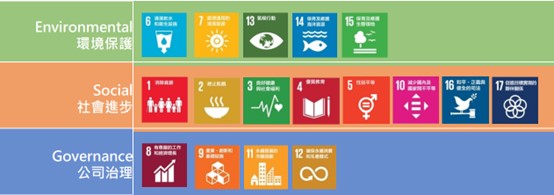
▍The United Nations set 17 sustainable development goals and 169 specific goals in 2015, covering three major aspects: environmental protection (Environmental), social progress (Social) and economic growth (Governance), as guidelines for the development of countries around the world before 2030. The abbreviation is ESG, which is a United Nations initiative.
The Taiwan Economic and Management Council has stipulated that companies should continue to strengthen information transparency and disclosure quality, respond to ESG-related risk issues of concern to stakeholders, and promote sustainable operations. The "Operational Measures for Preparing and Submitting Sustainability Reports for Listed and Overseas Companies" announced in December 2010. The standards for sustainability reports are called the "GRI Standard" released in 2019 and the "Sustainable Information Disclosure Standards Universal Standards 2021" released in 2021. The targets are companies in the food industry, chemical industry and finance and insurance, whose catering revenue accounts for more than 50% of revenue, and whose capital reaches more than 2 billion yuan (112 years).
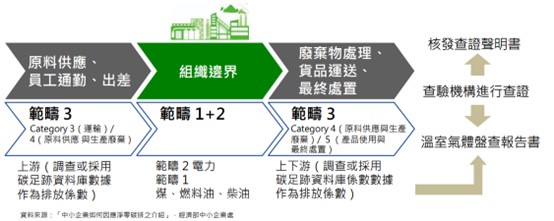
▍Taiwan's Environmental Protection Agency also responded to the international trend of net-zero carbon emissions. In July 2015, the "Greenhouse Gas Reduction and Management Act" set a goal of reducing carbon emissions by 50% in 2050 from the 2005 level. The "Greenhouse Gas Emission Source Inventory Guidelines" will be revised before the end of March 2022 to make more concise regulations for manufacturing industries with small emissions, companies that need to conduct carbon inventories due to supply chain requirements, or other small and medium-sized enterprises and service industries that voluntarily conduct inventories.
To put it simply, large companies need ESG reports to comply with corporate sustainability, while small and medium-sized enterprises need to conduct carbon emission inventories to comply with the requirements of the Environmental Protection Agency. If you want to make the leap from a small and medium-sized enterprise to a large enterprise, you need to start an overall strategic planning and sustainability report.
SMEs in Taiwan account for as much as 90%. Therefore, how to assist SMEs in disclosing information in the future is an important challenge that the government and enterprises must face together.
▍What to do?
I think we should clarify our company's performance as early as possible through third-party certification agencies' inspections, such as ISO 9001, ISO14001, and ISO 14064-1 standards, and establish a company document management system.
Next, we will start to develop the next stage of the sustainability report step by step.
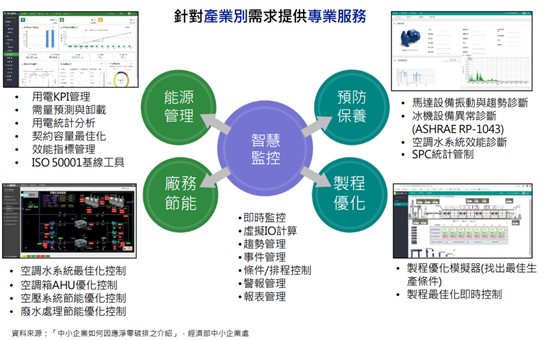
As for how many benefits ESG can bring to companies? In the current social environment and the development of the international situation, there are too many news about ESG being done well and the linked growth of EPS, so I won’t go into details about this.