
Greenhouse Gas and Carbon Footprint Inventory
What is a Greenhouse Gas and Carbon Footprint Inventory?
The Greenhouse Gas and Carbon Footprint Inventory includes the following certification standards: ISO 14064-1, ISO 14064-2, ISO 14067, and ISO 50001. These are all related certifications for greenhouse gas and carbon footprint inventories, and the primary differences between these standards lie in their focus and purpose.
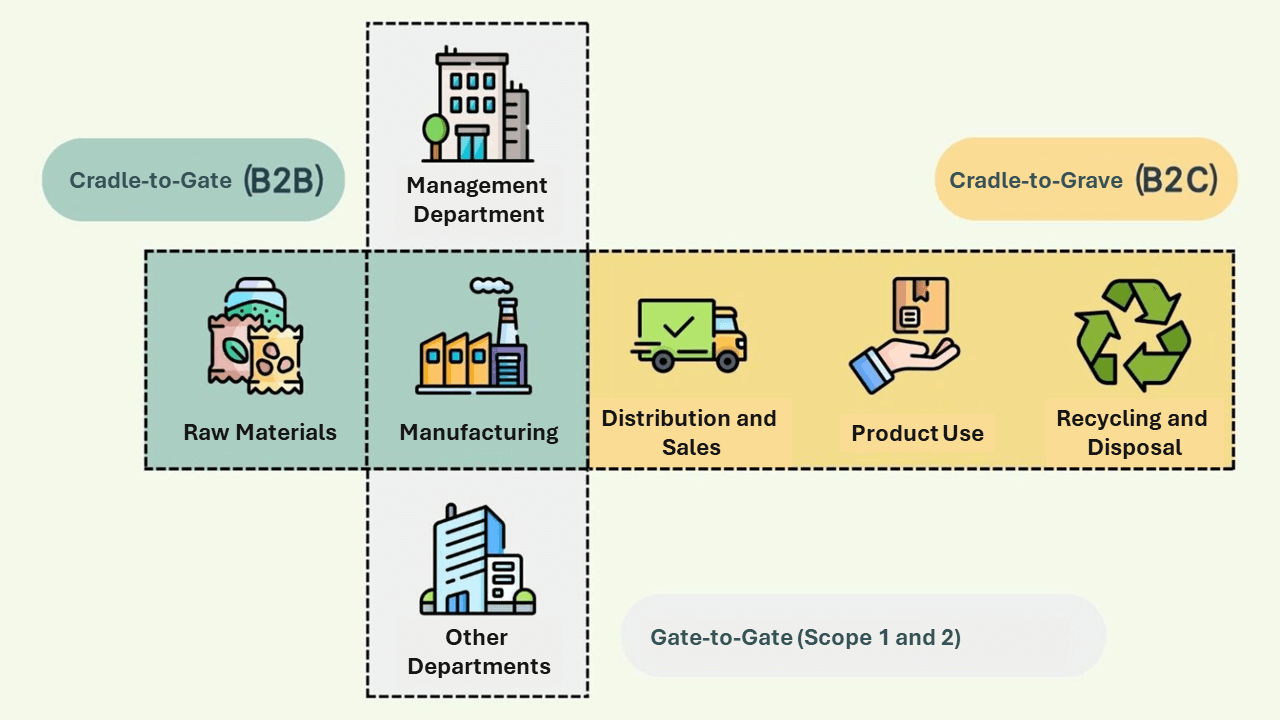
ISO 14064-1 focuses on “organizations” and covers the total greenhouse gas emissions of a company, as well as how to standardize these emission data to create a report known as an “Inventory.” The scope of this standard applies to a “gate-to-gate” assessment, focusing on emissions within the organization.
ISO 14064-2 targets “projects” and assesses a company’s carbon reduction and emission reduction strategies, including the feasibility of the strategy, expected outcomes, and assessment methods. This standard evaluates on a project basis, considering the overall organizational emissions.
ISO 14067, concerning “product” carbon footprints, quantifies the carbon emissions of a product (which could be goods or services) throughout its entire lifecycle and its environmental impact. Depending on the product characteristics, the scope can range from B2B’s “cradle-to-gate” to B2C’s “cradle-to-grave.”
ISO 50001, the Energy Management System standard, aims to help organizations achieve higher energy efficiency, reduce energy consumption, minimize energy waste, and lower related energy costs. It encourages organizations to establish, implement, maintain, and improve energy management systems to ensure effective use of energy.
Read more:
Comprehensive analysis of the six categories of greenhouse gas inventory
What are the benefits of implementing a Greenhouse Gas and Carbon Footprint Inventory for businesses??What issues does it reduce?
In the context of global challenges such as climate change and sustainable development, the implementation of greenhouse gas and carbon footprint management standards like ISO 14064-1, ISO 14064-2, ISO 14067, and ISO 50001 offers significant value and meaningful benefits to businesses. These include:importISO14064-1/ISO14064-2/ISO14067/ISO50001 etc.greenhouse gasesand carbon footprintinterrogationmanagement standards,The benefits that can be brought to the enterprise are:
Compliance with the EU Carbon Border Adjustment Mechanism (CBAM):
Through these certifications, companies can prove that their greenhouse gas management complies with international standards to cope with the requirements of the EU Carbon Border Adjustment Mechanism (CBAM), reduce trade risks and open up the EU market.
Meeting Global Climate Disclosure Project (CDP) Requirements:
By obtaining these certifications, companies can demonstrate that their greenhouse gas management complies with international standards, addressing the requirements of the EU Carbon Border Adjustment Mechanism (CBAM). This reduces trade risks and facilitates access to the EU market.CertificationWillHelp companies establish reliable greenhouse gas management systems, provide accurate data to respond to global Climate Disclosure Project (CDP) requirements, and demonstrate corporate leadership on climate change issues.
Improving Dow Jones Sustainability Index (DJSI) Scores:
passBy obtaining these certifications, companies can demonstrate that their greenhouse gas management complies with international standards, addressing the requirements of the EU Carbon Border Adjustment Mechanism (CBAM). This reduces trade risks and facilitates access to the EU market.With certification, companies can demonstrate their efforts and achievements in greenhouse gas management, improve their scores in the Dow Jones Sustainability Index (DJSI) rankings, and attract more attention and funds from ESG investors.
Compliance with Domestic Regulatory Requirements:
The Climate Change Response Act provides a robust tool for businesses to showcase their exemplary practices in managing greenhouse gases domestically. It meets the requirements of the Ministry of Environment and aligns with the Financial Supervisory Commission’s expectations for corporate ESG risk management.Climate Change Management Act》It provides a powerful tool to demonstrate its excellent greenhouse gas management practices, which is in line with the regulatory requirements of the Environmental Protection Agency and the Financial Supervisory Commission’s expectations for corporate ESG risk management.
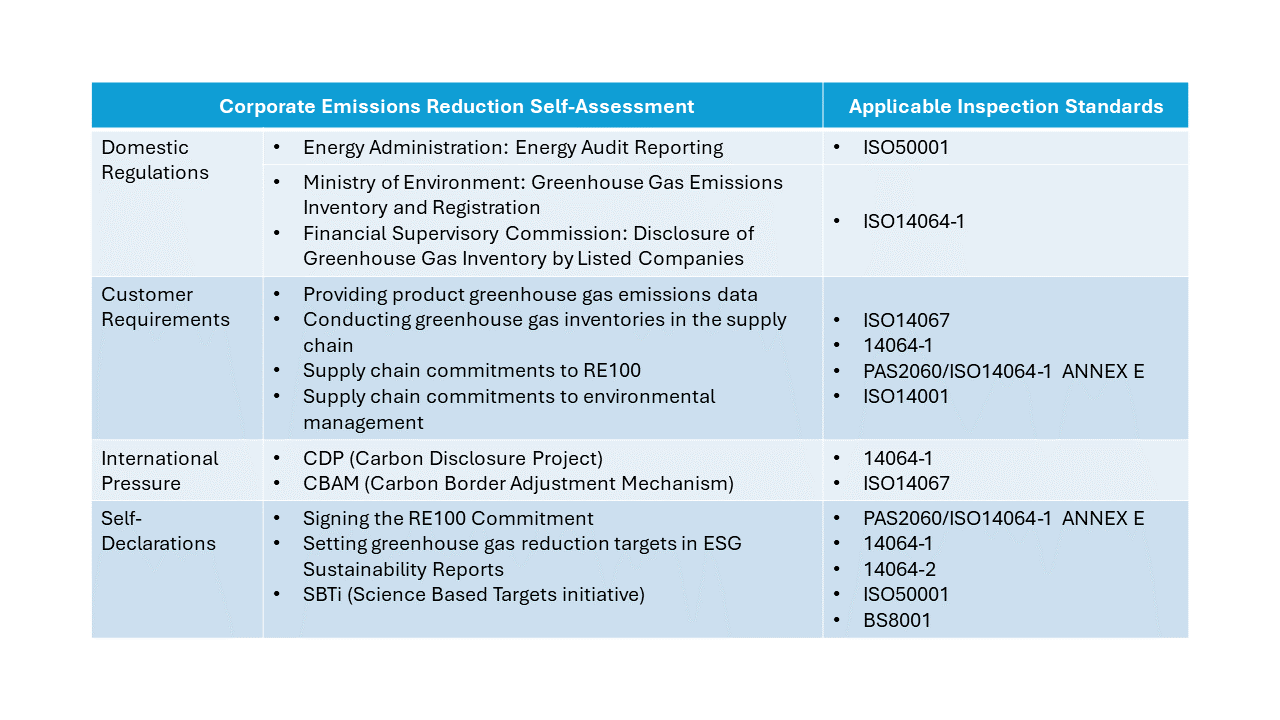
Here are the suggested standards for review, which businesses can consider based on their situation:
How long does it take to implement ISO 14064-1 Greenhouse Gas Inventory and ISO 14067 Product Carbon Footprint?
The time required to implement ISO 14064-1 Greenhouse Gas Inventory and ISO 14067 Product Carbon Footprint depends on the specific needs of the business, including the scope and the number of personnel involved. Typically, the implementation process takes about 6 to 9 months, depending on the company’s specific situation.Introduction time with ISO14067 product carbon footprintDepending on the needs of the company, the introduction time will vary depending on the scope and number of people, and it will take about 6 to 9 months to complete (depending on the company's situation).
What is the validity period of certificates related to Greenhouse Gas and Carbon Footprint Inventories?and carbon footprintRelatedHow long is the certificate valid?
Certificates related to Greenhouse Gas and Carbon Footprint Inventories are valid for three years, and they require an annual review.
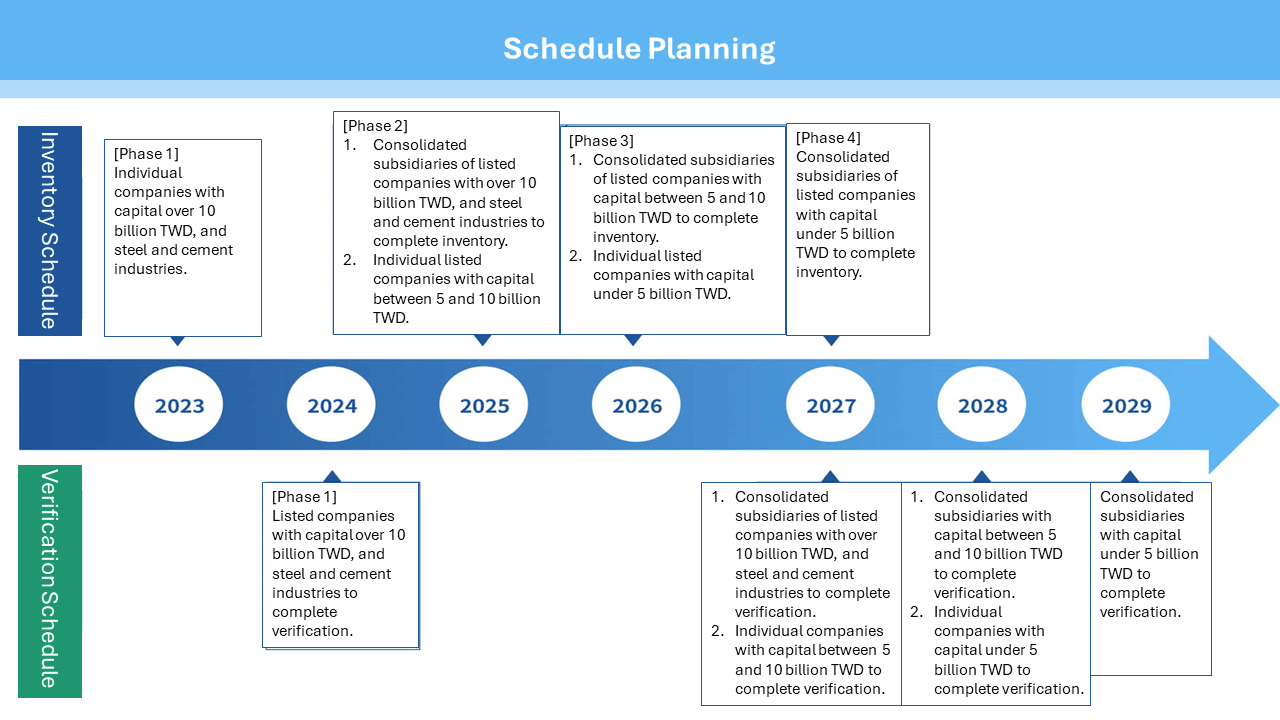
What are the government regulations and timelines for Greenhouse Gas Inventories and Carbon Footprints?