Company Background
In the fiercely competitive global electronics industry, WJ Enterprises stands out with its expertise in electronic material processing and manufacturing. These ultra-thin precision materials are critical to smart devices and advanced electronic products, and every micron counts.
As customers expanded into automotive displays and smart applications, WJ faced a pivotal challenge: how to maintain its competitive edge in precision materials while transitioning from a conventional electronics components’ supplier into a qualified player in the automotive supply chain.
Why choose IATF 16949?
For WJ, automotive certification wasn’t just about meeting industry requirements—it was about aligning its core strength in precision materials with the demanding expectations of global automotive clients like Tesla, Ford, and Foxconn. The automotive industry demands more than just high performance—it requires proven systems for consistency, risk management, and documentation.
IATF 16949 is the global benchmark for meeting these standards, often seen as the essential “passport” into the supply chain. Achieving IATF 16949 would not only validate its internal systems but also future-proof operations without compromising what they do best.
When Challenges Meet Opportunities
With the decision made, WJ is determined to implement IATF 16949 across its operations. But theory and practice don’t always align—and the road to certification quickly revealed deeper, structural challenges that extended far beyond documentation. What initially seemed like a “technical upgrade” soon revealed itself as a comprehensive transformation, as IATF demanded a shift in how the entire organization thought, worked, and collaborated.
Although WJ had existing quality systems, meeting IATF’s rigorous standards brought added complexity and discipline across all departments. As implementation progressed, key challenges such as the following surfaced, each requiring both structural adjustments and cultural change.
- Shifting from product-focused workflows to comprehensive, risk-based quality systems
- Ensuring staff could understand and apply the five core quality tools (FMEA, SPC, APQP, etc.)
- Establish a cross-departmental internal audit and structure framework
- Redesigning key processes without disrupting production efficiency
- Embedding new standards into daily operations as part of company culture—not an added burden
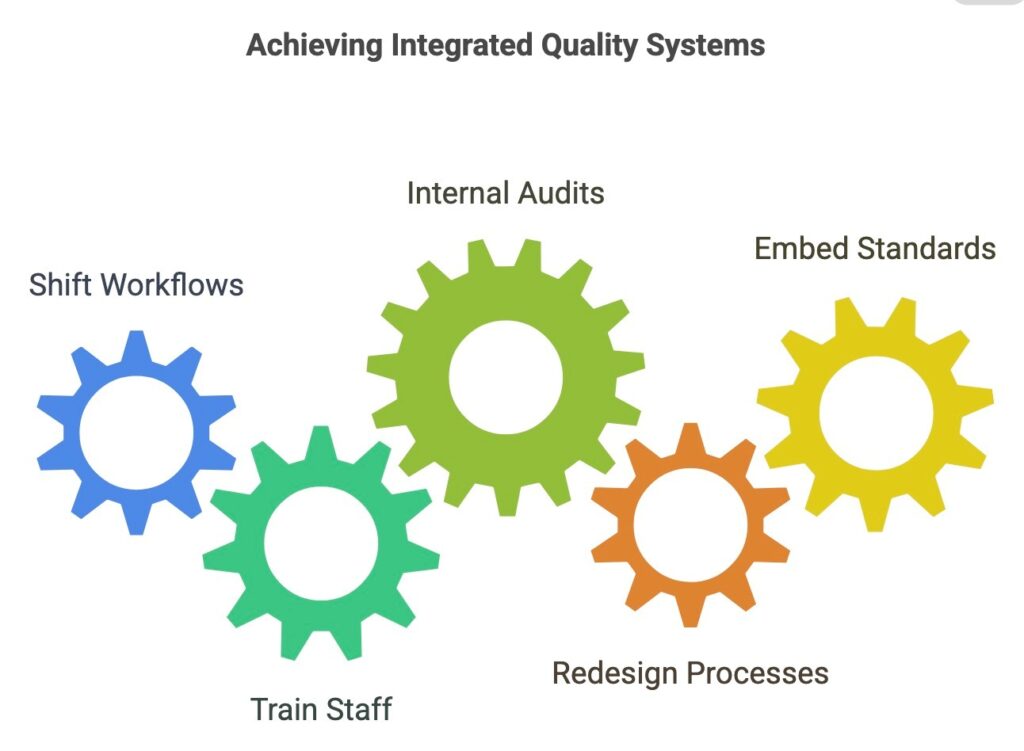
These issues were not only technical, they also demanded a “shift in mindset” across the organization. At this turning point, Minjeng Management Consulting joined the transformation journey.
Finding the Right Partner: Why Minjeng?
To navigate this transformation, WJ needed the right partner, one who understood both the standards and the realities of its production floor.
“We interviewed several consulting firms,” recalls ____, WJ’s chief operating officer. “What made Mingzhi different was their pragmatic approach. Rather than selling us a generic template or theoretical framework, they provided practical solutions based on their team’s industry experience.”
This practical orientation was crucial for WJ, whose specialized manufacturing processes did not fit neatly into standard quality management templates. The company needed a partner who could bridge the gap between IATF's requirements and their unique operational reality.
"Many consultants talked about what we needed to do," adds the Quality Manager. "Minjeng showed us how to do it in a way that made sense for our specific production environment. They spoke our language and understood our daily challenges." That deep understanding would define Minjeng’s unique consulting approach.
Minjeng's Role as Coaches
After working with Mingzhi, WJ quickly realized that this was not just a documentation exercise, but a complete cultural transformation. Mingzhi’s consultants did not rely on theories or templates, but tailored a practical roadmap based on WJ’s unique manufacturing processes, company culture, and departmental workflows.
The team first went deep into WJ's production line, spent several weeks observing the actual operation, interacting with frontline employees, and understanding the challenges in the real environment. This "immersive" consulting method ensures that the subsequent solutions are based on reality rather than staying at the theoretical ideal level.
Minjeng’s supports include:
- Internal training and practical application of IATF's five core tools
- Building comprehensive risk management systems (FMEA, control plans)
- Reconstructing document control and internal audit processes
- Simulating external audits and guiding corrective actions
- Link performance goals to departmental performance goals
- Training internal instructors to sustain IATF system knowledge
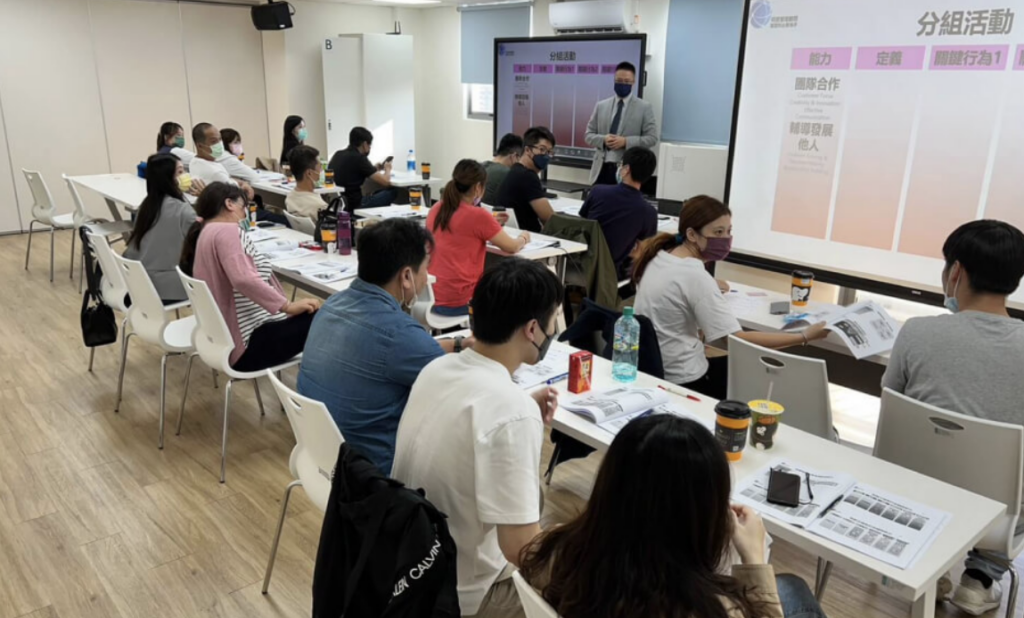
These efforts laid the foundation for lasting, organization-wide change. Through cross-functional collaboration, Mingzhi helped integrate quality into every stage of the product lifecycle, from customer demand to delivery. Processes such as quality assurance, production, R&D, and supplier management were streamlined and risk managed.
Proven audit simulations and practical guidance not only improve technical skills but also enhance team confidence. Their pragmatic approach ensures that every improvement can bring measurable value to WJ.
IATF Outcomes Drives Growth
These transformation efforts created a major milestone -- WJ successfully achieved IATF 16949:2016 certification. But more than a stamp of approval, it marked a turning point in the company’s operational maturity and strategic direction.
The impact was measurable:
- Customer satisfaction rose by 15%
- New customer development cycles shortened by 20%
- More stable delivery schedules
- Risk exposure dropped by approximately 30%
- Enhanced quality-first mindset across departments
- Improved Communication and coordination between teams
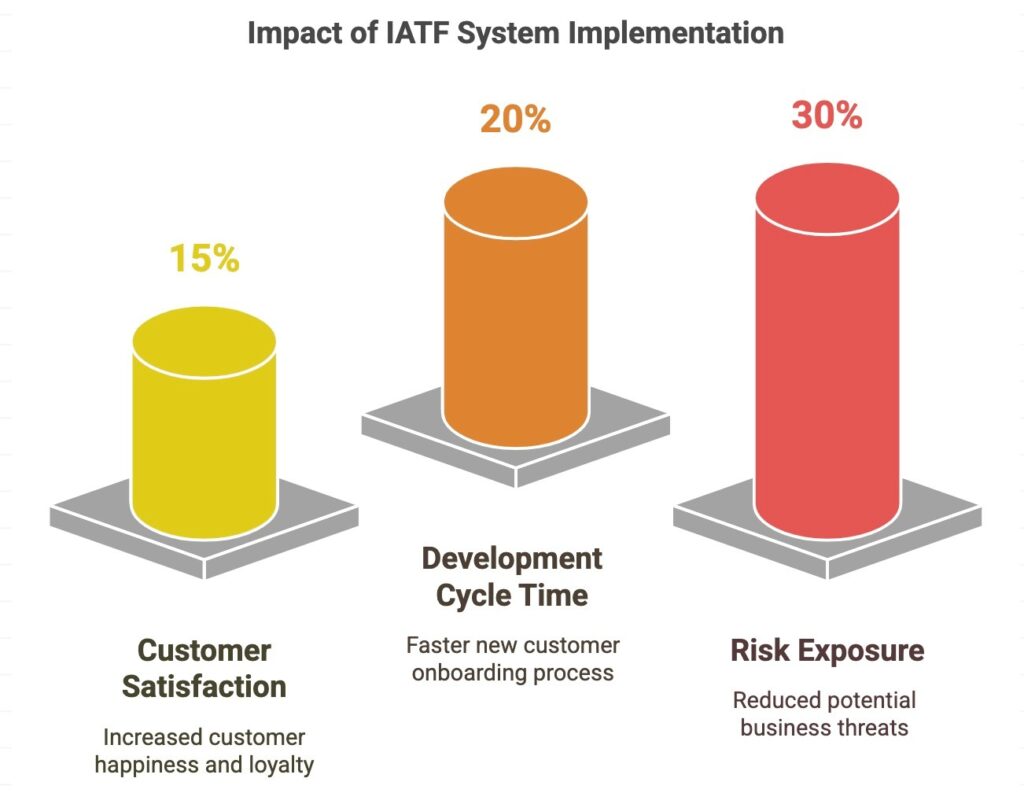
Beyond the numbers, this project laid a foundation for international expansion and innovation, driven by a shared commitment to quality and continuous improvement. WJ’s leadership noted that the transformation not only enabled smooth entry into the automotive supply chain but also optimized internal operations, creating a platform for future growth and diversification.
As WJ’s CEO put it: “MinJeng didn’t just help us check boxes—they helped us transform how we think about quality. Their consultants became trusted advisors who understood our business and guided us through changes that delivered real value beyond certification.”
In conclusion
Building on its IATF success, WJ is expanding its partnership with MinJeng to implement systems like ISO 14064 for carbon footprint reporting and ISO 27001 for information security—aligning with global ESG and sustainability standards.
“What started as a certification project has become a long-term strategic partnership,” says WJ’s Planning Director. “MinJeng delivers results that go beyond compliance—they impact how we operate and grow.
WJ’s transformation signals more than market access—it reflects a commitment to operational excellence and continuous improvement.