
IATF Six Core Tools
Course Description
💡 Latest Industry Trends: IATF 16949's five core tools are evolving into six. In response to the latest 2024 revision, the Control Plan (CP) has been officially established as a separate document, becoming the sixth core tool. This course has been comprehensively upgraded to help you master the latest CP requirements and practical applications.
[Total Hours]14 hrs (can be adjusted according to business needs)
[Organizer]Mingzheng Management Consulting Co., Ltd.
[Course Targets
Product Planning, Business, Design, Development, Purchasing, Production Management, Quality Assurance and Manufacturing Engineers, Supervisors above class level and junior supervisors.
Course Description
- Cultivate enterprise staff to effectively and correctly use the six core tools to assist management to implement and improve the enterprise IATF 16949:2016 quality management system to achieve organisational goals.
- Learn how to use the six core tools of the Automotive Quality Management System to achieve a process-oriented approach to product development and production that meets customer expectations, and thus the ability to cope with change.
[Course Information and Registration]
1. Teaching method:
- Online coursesEnrollment is open anytime, and classes start anytime. Students can flexibly schedule their time to log in to the platform to study.
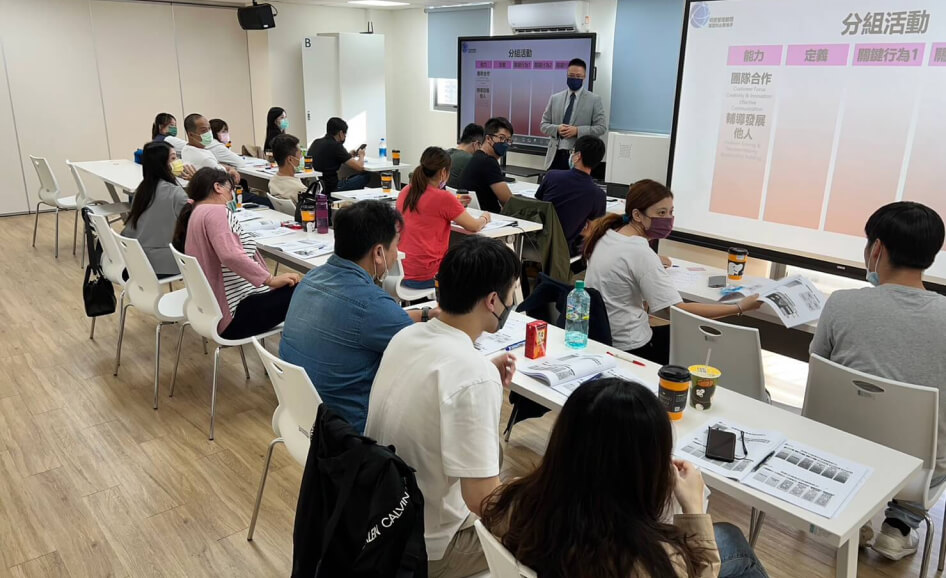
- Corporate ClassesCorporate class booking: We can arrange classes according to your company's needs (please contact us by email or phone for details).
2. Course Fees and Discounts
- Online course feesEach person NT$12,000.
- Group booking discount (Discounts cannot be applied repeatedly):
- Same company 2 or more people Registration: Enjoy 5% off discount.
- Same company 4 or more Registration: Enjoy 10% off discount.
- Included in the feeThe fee includes: business tax, course handouts, practice materials for the six core tools, certificate, and one re-examination fee (Note: the re-examination fee is only applicable to online courses and is not applicable to package courses).
3. Registration and Learning Process
- Fill out the registration form:Please fill in the registration information in the online form.
- Account activation:Once payment is confirmed, the system will immediately activate the student's account.
- Sending materials:The physical course handouts and related practice materials will be sent to the student's designated address.
- Online learning:Students can log in to the platform at any time with their account to study courses.
- Online exams:After completing all course units, you must take an online quiz.
- Certificate Issuance::
- Those who pass the exam: Issuance of course completion certificate.
- Those who failed the exam:A certificate of completion will be issued (one free re-examination opportunity will be provided within one year).
Programme Outline
Day 1 Project Management, Introduction to Six Core, APQP, PPAP, CP | Time | Teaching Method |
I. Project Management, Six Core Introduction, APQP, CP
| 3.5 hr | Lecturers Field Exercise Interactive Validation |
Two,APQPPPAP
| 3.5 hr | Lecturers Field Exercise Interactive Validation |
|
Day 2 FMEA, MSA, SPC |
Time |
Teaching Method |
|
I. FMEA, MSA, SPC
|
3.5 hr |
Lecturers Field Exercise Interactive Validation |
|
Two,SPC
|
3.5 hr |
Lecturers Field Exercise Interactive Validation |