
Management Processes and Techniques

Course Description

[Total Hours]14 hrs

[Course Targets

  1. Top and Bottom Middle Managers
  2. Rookie Supervisor
  3. Workers who want to acquire problem-solving skills
  4. Mid-level executives who want to understand the needs of their bosses and supervisors to solve problems.

Course Description

  1. It allows participants to develop a management mindset, establish behavioural patterns, manage things and people, systematically solve problems, and then go on to performance evaluation and staff development. The entire management process is disassembled, and each step in the management process is explained in detail with principles, skills and techniques.
  2. Live practice, allowing participants to complete the duty competency list, problem analysis, and also complete the empathy communication window and cross-departmental collaboration exercise, so that participants can master the principles to the actual practice, and then to cope with the ability to change.
Programme Outline

Day 1 Supervisor's mentality, departmental culture, goal setting and decision-making management, management of affairs.TimeTeaching Method

I.      Supervisor's mentality, departmental culture establishment

  • Mastering individuality, cutting off strengths and making up for weaknesses
    Just because you know how to cook, it doesn't mean you can run a kitchen; even if you have a car driving licence, you need to follow the skills you have learnt to handle it and integrate them in order to get to your destination safely.
    The first step is to understand your own personality and start building your own mindset, and remember: don't be instinctive.
    [Group Activity] Four-colour Personality Analysis and Understanding Each Other
  • Culture building
    Then, from the adjustment of mindset, behavioural display, start to build culture, culture depends on your behaviour, not slogans, how to systematically build your own team's culture in your every move to align with the company's values and vision goals.
    Mentality, behaviour, what are these principles and techniques?
3.5 hr

Lecturers

Field Exercise

Interactive Validation

II.      Goal Setting and Decision Making Management, Managing Things

  • Goal Setting and Decision Making
    SMART principles, functional competency modelling
    How to assign tasks and what are the traditional KPIs? Participants will complete a job competency list and learn about the job competency model, and understand the tools to make the team's goal setting clearer, and how the supervisor can best assign the work? Is it based on ability or willingness? How to train effectively?
    [Group Activity] Exercise on how to build up the competence of the job. 
  • Managing Things
    Rhythm and questioning techniques, cross-departmental collaboration and division of labour
    How do you quickly master the skills of enquiry and how do you reduce micromanagement? It is impossible to have cross-departmental co-operation without negotiating the core interests of the departments, how to do a good job in the division of labour and responsibilities and cross-departmental co-operation, what are the principles?
    [Group Activity] Departmental Co-operation and Communication Skills 
3.5 hr

Lecturers

Field Exercise

Interactive Validation

Day 2 Leadership of People, Problem (Crisis) Analysis and Work Improvement, Performance and Staff DevelopmentTimeTeaching Method

One,Leadership of people, problem (crisis) analysis and work improvement

  • Leadership of People
    Effective Communication, Positive Feedback and Corrective Feedback Sentence Types, What Makes a Good Habit of Empathic Communication?
    [Group Activity] Window of Communication Exercise: Understanding Yourself / How to Trust Yourself More
    [Group Activity] Empathy ExerciseInventory of employees' working ability and cultivation of their willingness to work.
    Cross-generational leadership, how to lead new recruits and old birds, and in what ways?
    [Group Discussion] Situational Questions to Lead Group Thinking
  • Problem (Crisis) Analysis and Work Improvement
    Problems can arise at any time, how to grasp the principle of thinking in a network, from the surface phenomenon, slowly in-depth analysis to the deeper problems, thinking in a network, how to classify how to focus, not only focus on quality control, but the analysis of various aspects of the problem.
    The blind spot of a problem, what is a problem, how to judge the real problem. How to find out the root cause and how to improve and optimise? What are the principles to get twice the result with half the effort? How to deal with crisis?
    Group Activity] Analysing how to produce problems by following the current events.
    Traditional 8D analysis, instruction and practice of the 8 D's.
3.5 hr

Lecturers

Field Exercise

Interactive Validation

Two,Performance and Staff Development

  • Performance
    KPIs are not the only thing that counts in performance appraisal. Performance appraisal has to cover all aspects, including objectives, performance, competence and ability to perform, what are these principles? What are these principles and how should they be scored?
    The 8 Dos and 5 Don'ts of Performance Measurement.
    5 Principles for Motivating Employees.
  • Staff Development
    How to establish a legacy, construct a training system, and analyse the principles and techniques of staff development, retention and suitability.
    [Group Activity] Through the discussion of each group, the suitable training for the future departmental organisation can be suggested to the HR and senior management of the organisation.
3.5 hr

Lecturers

Field Exercise

Interactive Validation

Lecturers

CHAN MUI YIU                                                          

[Experience]

China white powder specialitybarleyKes's Observation Notes - Iso Systems Certified Counselling Consultant

Lecturer Profile / Lecturing Style]

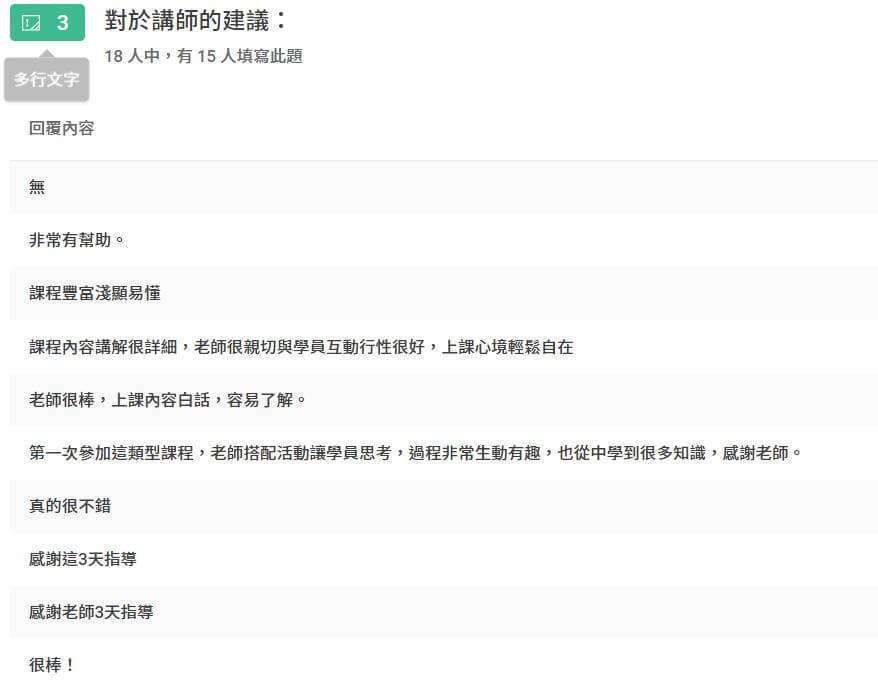
Mr Chen is definitely a lecturer who is more than capable of making difficult things very simple. His aim is to convey the theoretical basis combined with years of practical/counselling experience in the industry in an easy-to-understand way in a short period of time.

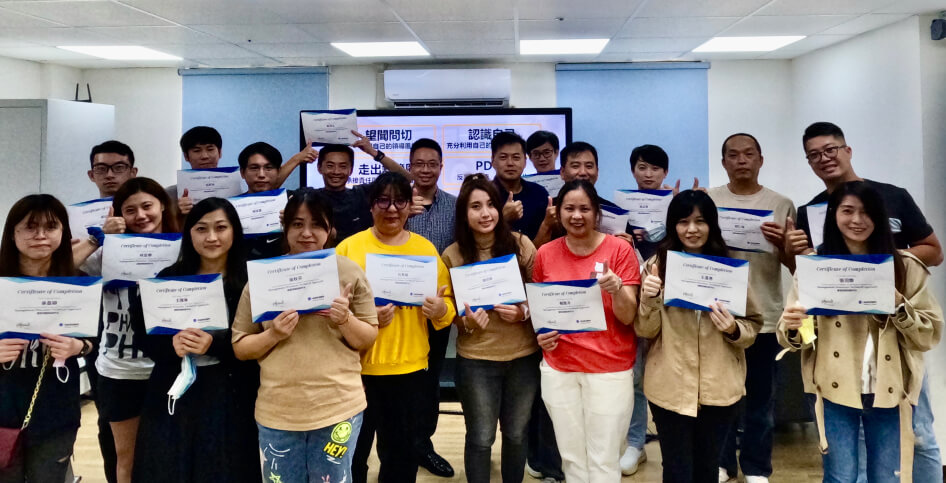
Mr Chan takes the initiative to conduct surveys for students to fill in before the class, and coordinates with the unit to ensure the accuracy of the class. She is patient, friendly, and active listener, and is able to use contextual images and energy to lead students to brainstorming. Mr Chan's teaching style often makes use of many interactive games, exercises, and interspersed with interesting teaching passages for students to quickly absorb and learn from them.

[Teaching Experience]

Management Practices Course Units::

Corporate Lectures: Wear Whale Enterprise, Beauty Technology, Pang Yang Industry, Jian Yue Industry, Rui Jun Technology

返回頂端