
Management Processes and Techniques

TRAINING DESCRIPTION

【TOTAL TRAINING HOURS】14 hrs

【TARGET AUDIENCE】

  1. Mid-level managers who confront both superiors and subordinates
  2. Novice supervisor
  3. Workers who want to master problem-solving skills
  4. Mid-level managers who want to understand the needs of their bosses and supervisors and solve problems

【TRAINING DESCRIPTION】

  1. Train participants from developing a managerial mindset, establishing behavioral patterns, to managing tasks and people, systematizing problem resolution, and then to performance evaluation and staff development. The course deconstructs management, detailing the principles, techniques, and methods for each step of the management process.
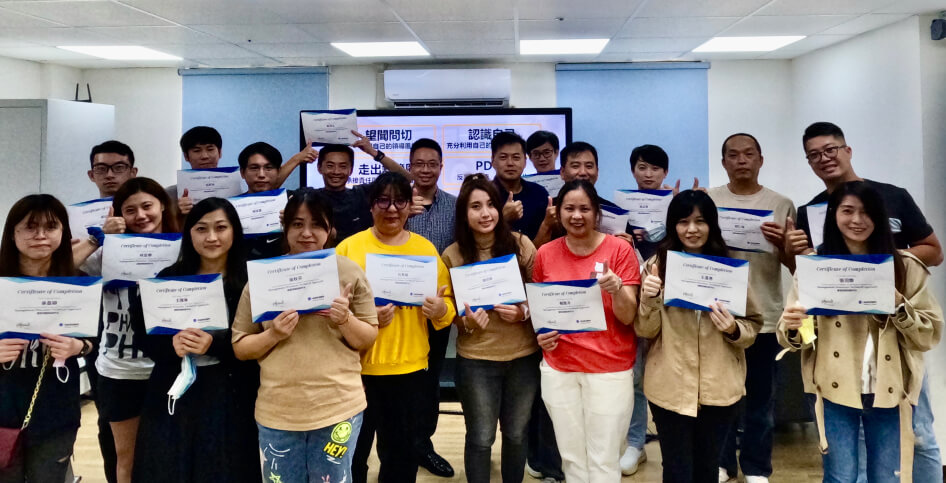
  2. Hands-on experience allows participants to complete job competency profiles, analyze problem contexts, and engage in exercises on empathetic communication and cross-departmental collaboration. This equips participants with the skills to master principles and practical exercises, ultimately enhancing their adaptability.
TRAINING SYLLABUS

Day 1 Supervisor mentality, department culture, goal setting and decision-making management, and matter managementHOURSTRAINING METHODS

I.      Supervisor mentality and department culture establishment

  • Master your personality, cut off your strengths and make up for your weaknesses
    You can cook, but you may not be able to manage the kitchen; even if you get a driver's license, you still need to learn the skills and master them to reach your destination safely.
    First of all, you must start to establish your own mentality by understanding your own personality. Remember: don't be egoistic.
    [Group activity] Four color personality analysis and understanding each other
  • culture building
    Then start with the adjustment of mentality and the display of behavior to establish culture. Culture depends on your behavior, not slogans. How to systematically build your own team's culture in every move you make to align with the company's values ​​and vision goals.
    Mentality, behavior, what are these principles and techniques?
3.5 hr

Lecturer Lessons

Practical Exercises

Interactive Verify

II.      Goal setting and decision-making management, management of things

  • Goal setting and decision-making
    SMART principles, job competency model
    How to allocate tasks? What other KPIs are there besides traditional KPIs? Ask students to complete the job competency table, learn the job competency model table, and understand the tools that make team goal setting clearer. How can the supervisor best allocate work? Should we look at ability or willingness? How to train effectively?
    [Group activity] Practice on how to establish job capabilities 
  • management of things
    How to master rhythm and questioning techniques, cross-department collaboration, and division of powers and responsibilities
    How can you quickly master inquiry skills and how to reduce micromanagement? If the core interests of cross-departments have not been negotiated, there will be no cross-department cooperation. How to carry out the division of power and responsibilities and cross-department cooperation? What are the principles?
    【Group Activities】Department Cooperation and Communication Skills 
3.5 hr

Lecturer Lessons

Practical Exercises

Interactive Verify

Day 2 People leadership, problem (crisis) analysis and work improvement, performance and employee developmentHOURSTRAINING METHODS

One,People leadership, problem (crisis) analysis and work improvement

  • leadership of people
    Effective communication, positive feedback and corrective feedback sentence patterns, what are good habits of empathetic communication?
    [Group activity] Communication window practice to understand yourself/subordinates and how to trust yourself more
    [Group activity] Empathy practiceInventory of subordinates’ work abilities and cultivation of willingness
    Cross-generational leadership, how to lead new recruits and veterans, and what methods should be used?
    [Group discussion] Situational questions allow the group to think about the direction of leadership
  • Problem (crisis) analysis and work improvement
    Questions will arise at any time, how to master the principles of contextual thinking, from superficial phenomena, to slowly and deeply dissect to the deep issues, contextual thinking, how to classify and how to focus, not only focus on quality control, but analysis of problems in all aspects.
    The blind spot of the problem is what counts as a problem and how to judge the authenticity. How to improve and optimize the root cause? What principles can be mastered to get twice the result with half the effort? How to deal with a crisis?
    [Group activity] Use current events to follow the context and produce an analysis of the problem
    Traditional 8D analysis, guidance and practice of the 8 Ds.
3.5 hr

Lecturer Lessons

Practical Exercises

Interactive Verify

Two,Performance and employee development

  • performance
    Performance appraisal is not just based on KPI. Performance evaluation should include all aspects, including goals, work performance, job abilities and work abilities. What are these principles? How to score?
    8 Do’s and 5 Don’ts of Performance Appraisal.
    5 principles for motivating employees.
  • staff development
    Analysis of how to establish inheritance, construct a training system, and analyze the principles and methods of employee development, talent retention, and talent retention.
    【Group activity】Through group discussions, each group can discuss appropriate training for future department organizations, and suggestions can be made to the organization’s HR and senior management
3.5 hr

Lecturer Lessons

Practical Exercises

Interactive Verify

LECTURER

CHAN MUI YIU                                                          

【EXPERIENCE]

FanzhuanwheatObservation Notes of Chris - Iso System Certified Counseling Consultant

【INSTRUCTOR PROFILE/ TEACHING STYLE]

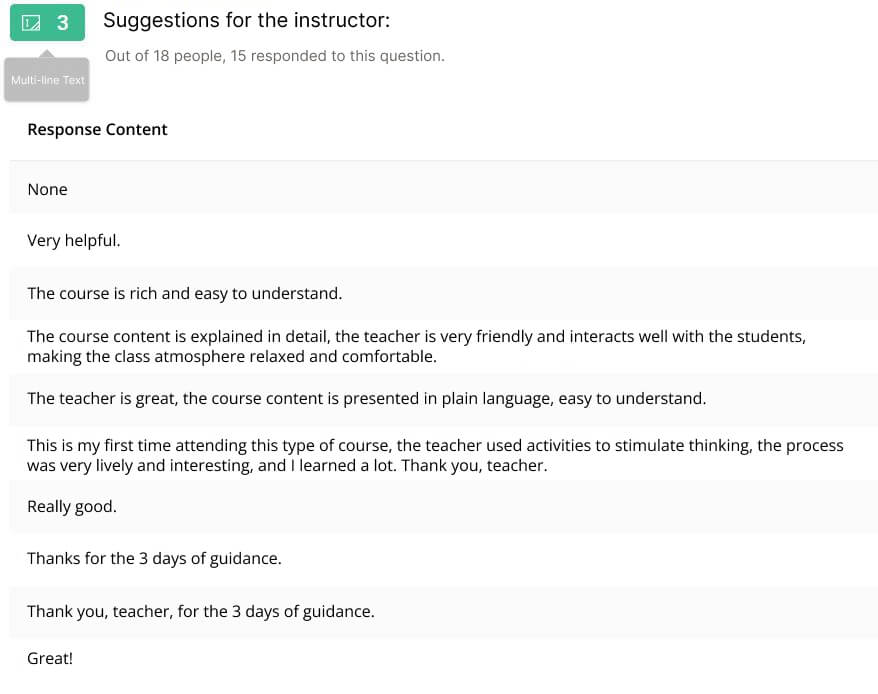
陳老師 is certainly an instructor who excels at simplifying complex topics, with the goal of conveying theoretical foundations combined with years of industry experience and practical coaching in an easily understandable way within a short period of time.

Before the course, 陳老師 proactively conducts surveys for students to fill out, coordinating with units to fine-tune the accuracy of the class content. He is patient, approachable, and friendly, an active listener who skillfully uses scenarios and energy to facilitate brainstorming among participants. The lecturer’s teaching style is characterized by the frequent use of interactive games and exercises during lectures, interspersed with engaging teaching segments that allow participants to quickly absorb and learn.

【TEACHING EXPERIENCE]

Management Practice Teaching Assignments::

Corporate Training: Waih Jing Enterprise Co., Ltd., Webest Solution, Taiwan Brake Technology, NACHI C.Y., Uptron Technology.

返回頂端